

When Is the Best Time to See the Northern Lights in the Canadian Rockies
The northern lights can occur throughout the year, but you need a dark sky to see them. In the Canadian Rockies, September through April generally offers the most practical viewing conditions thanks to longer nights.
The weeks around the fall and spring equinoxes can also be particularly interesting for aurora watchers. Geomagnetic activity tends to increase around the equinoxes, creating more opportunities for strong displays.
Most importantly, be patient. The northern lights are a natural phenomenon, and even a promising forecast doesn’t guarantee a show.
If you’re planning a cold-weather trip, explore our guide to winter activities in Banff, Canmore, and Kananaskis for more ways to make the most of your days in the Rockies.
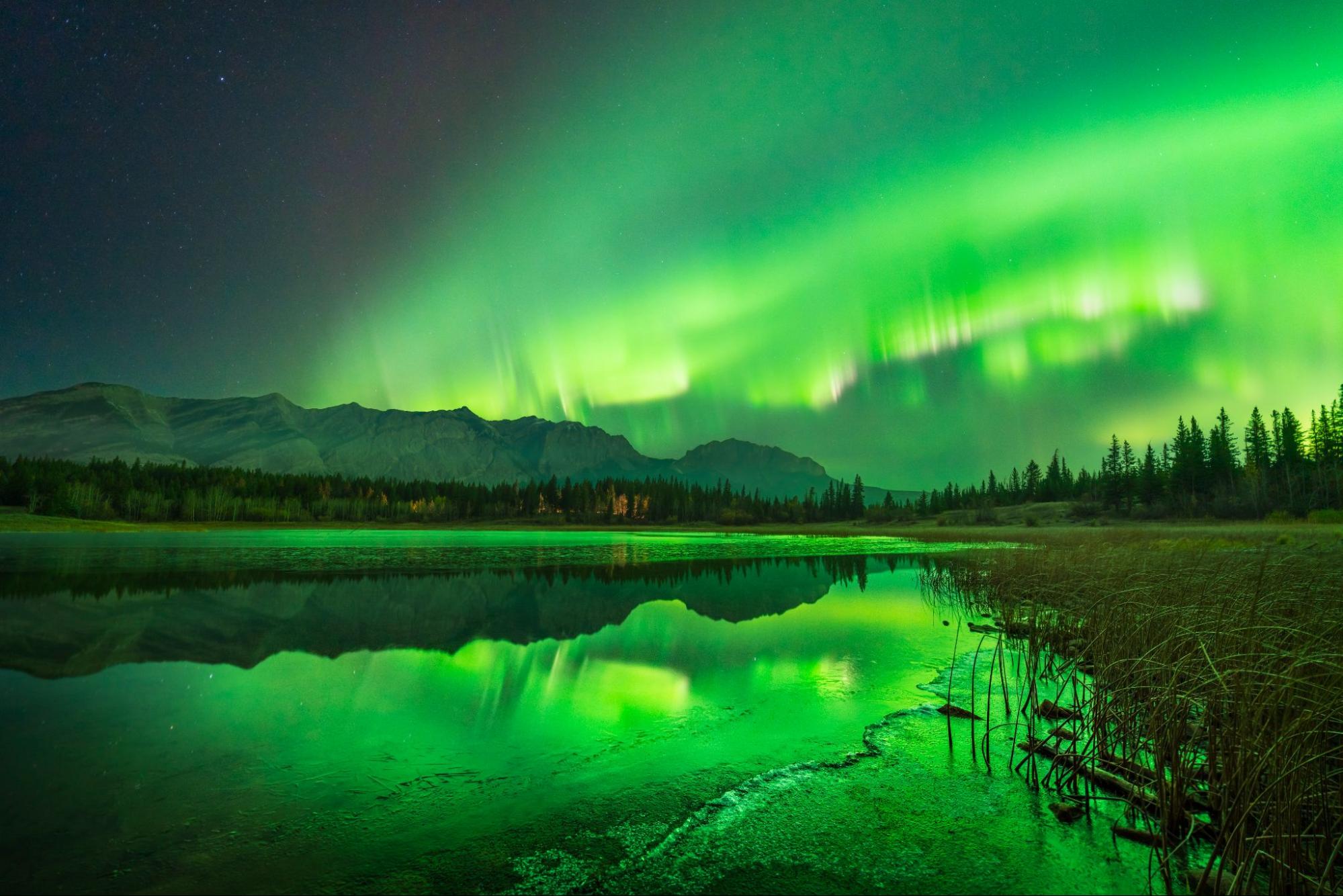
Where Can You See the Northern Lights in the Kananaskis Country, Canmore and Banff National Park?
Dark skies, an open view and minimal artificial light are the ingredients you’re looking for. Fortunately, Kananaskis Country, Canmore, and Banff National Park offer plenty of possibilities.
Kananaskis Country
Kananaskis offers some of the darkest skies near Canmore, with plenty of mountain scenery to frame the aurora.
Barrier Lake is a popular option with an open sky and relatively little artificial light. It also offers plenty of foreground interest for photographers when conditions are right.
If you’re travelling deeper into Kananaskis, always check current road conditions and closures before leaving. Highwood Pass is not accessible by vehicle in winter: the Highway 40 section over the pass closes annually from December 1 through June 14.
If you’re parking at provincial park or public land sites in Kananaskis Country or the Bow Valley, remember that your vehicle may require a Kananaskis Conservation Pass.
Spending more time in the area? Our guide to hidden winter gems in the Canadian Rockies includes more places worth exploring around Kananskis and the Bow Valley.
Canmore
You don’t have to travel far from Canmore to find darker skies and beautiful mountain views.
Quarry Lake is close to town and offers open views with the surrounding peaks as a backdrop. Because you’re still near Canmore, some light pollution is unavoidable, but a strong aurora can still put on an impressive show.
Spray Lakes Road, also known as the Smith-Dorrien Trail or Highway 742, takes you farther from town lights. Keep in mind that this is a mountain road, conditions can change quickly, and cell service is limited or unavailable in sections. Check road and weather conditions before heading out at night.
Wherever you stop, use designated parking areas and avoid stopping on the roadway.
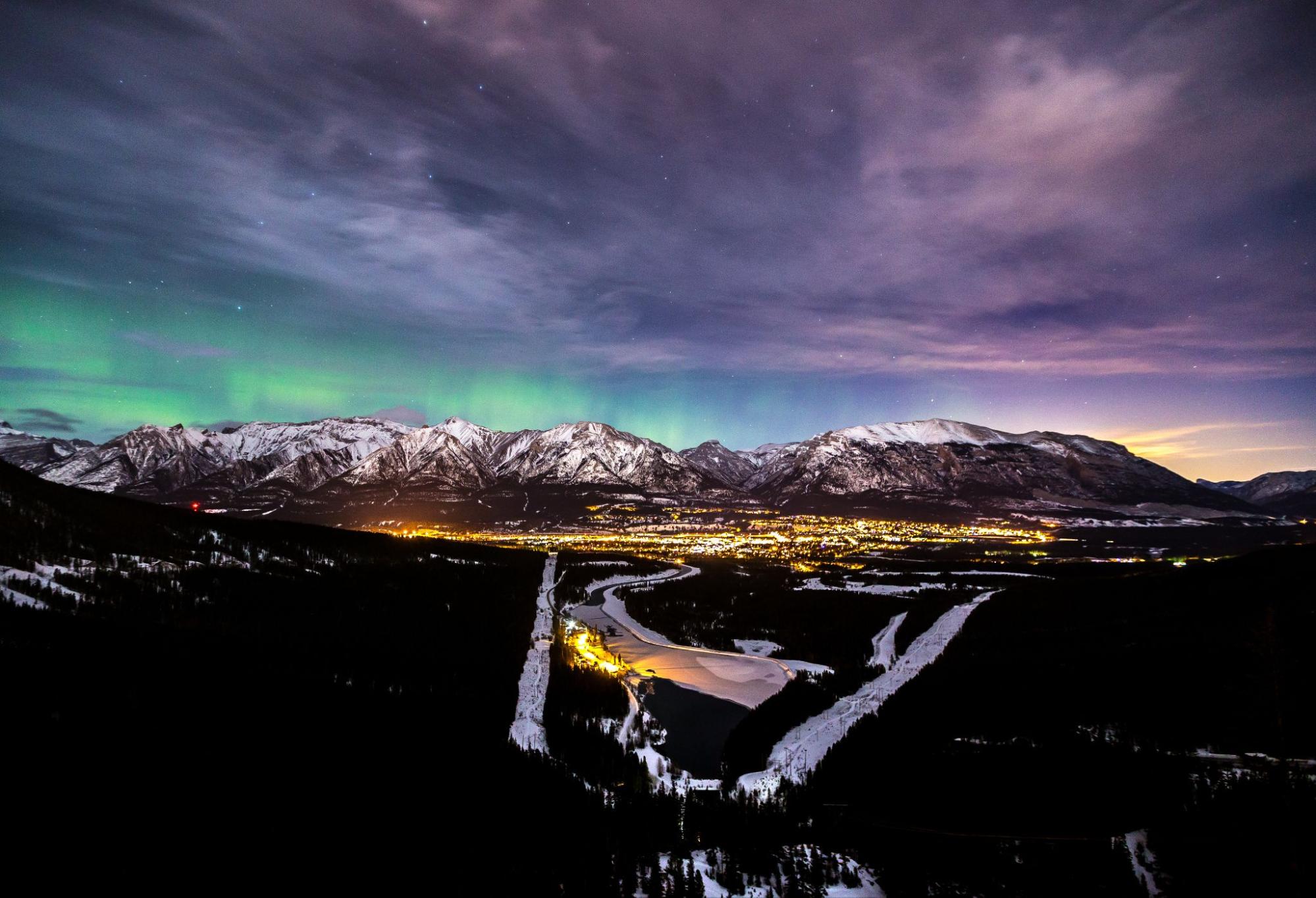
Banff National Park
Banff National Park combines relatively dark skies with some of the Canadian Rockies’ most recognizable landscapes.
Vermilion Lakes is just outside the Banff townsite and is a favourite among photographers. On calm nights, the water can reflect the aurora and surrounding mountains.
Lake Minnewanka offers a wide view of the sky and is another popular choice for northern lights viewing near Banff.
Mount Norquay Road also provides elevated viewpoints above the townsite. Be prepared for winter driving conditions and watch carefully for wildlife.
A valid Parks Canada entry pass is required when you’re stopping and spending time in Banff National Park.
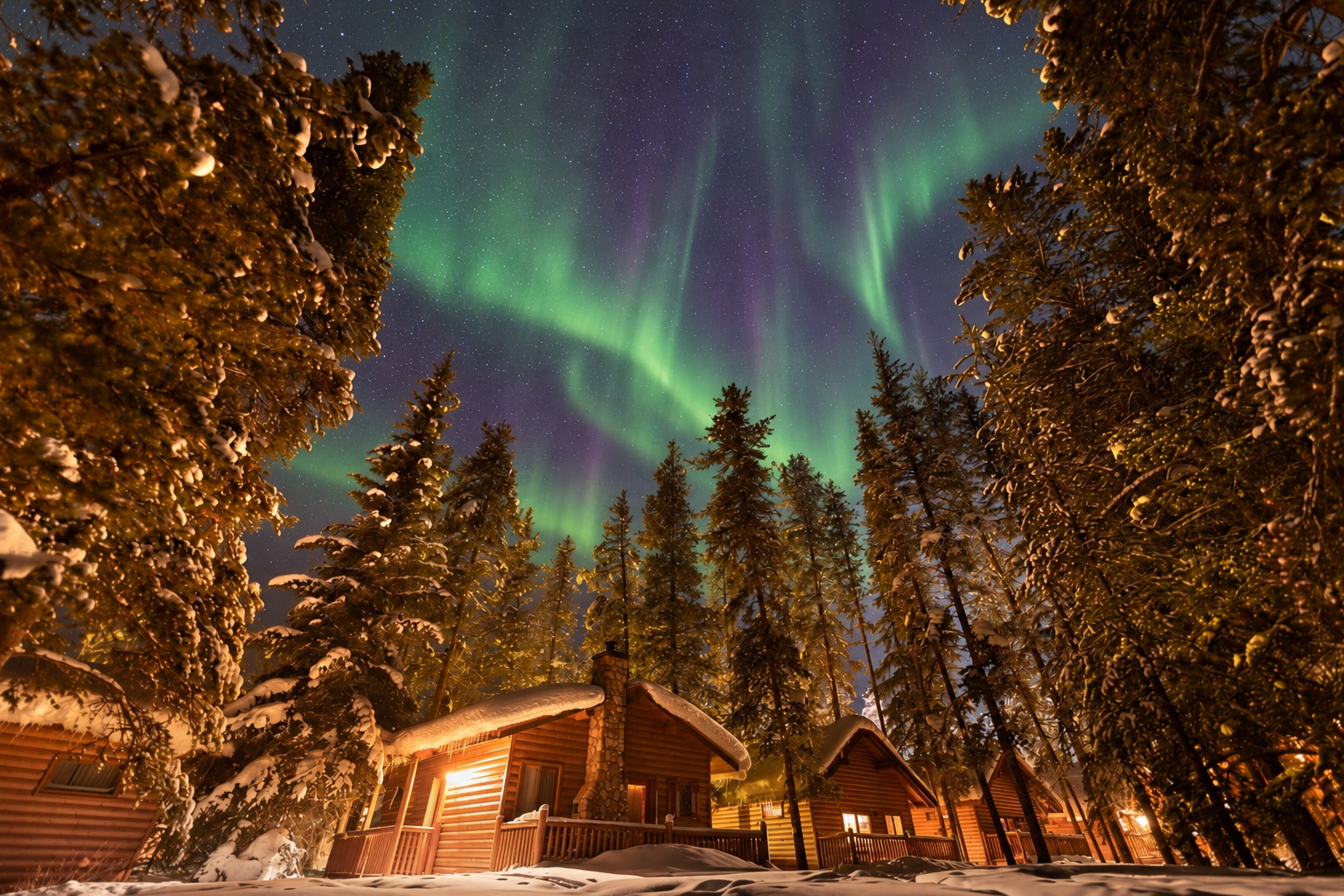
How to Know if the Northern Lights Will be Visible
A clear night isn’t enough. You also need activity from the sun to create an aurora strong enough to see this far south.
Before heading out, check three things:
- Aurora activity
Check a reliable space-weather forecast for current geomagnetic conditions. Space Weather Canada provides current conditions and short-term forecasts, while tools such as SpaceWeatherLive can make aurora activity easier to follow.
- Cloud cover
A strong aurora won’t help if the Rockies are covered in clouds. Check the local weather forecast before committing to a late-night drive.
- Real-time conditions
The Banff Sunshine Village Aurora Cam can provide a live look at the sky above the region. If you’re staying nearby, it can be a useful final check before putting on your winter gear and heading outside.
Don’t rely on the Kp number alone. Aurora forecasts change, sometimes quickly, so real-time conditions matter.
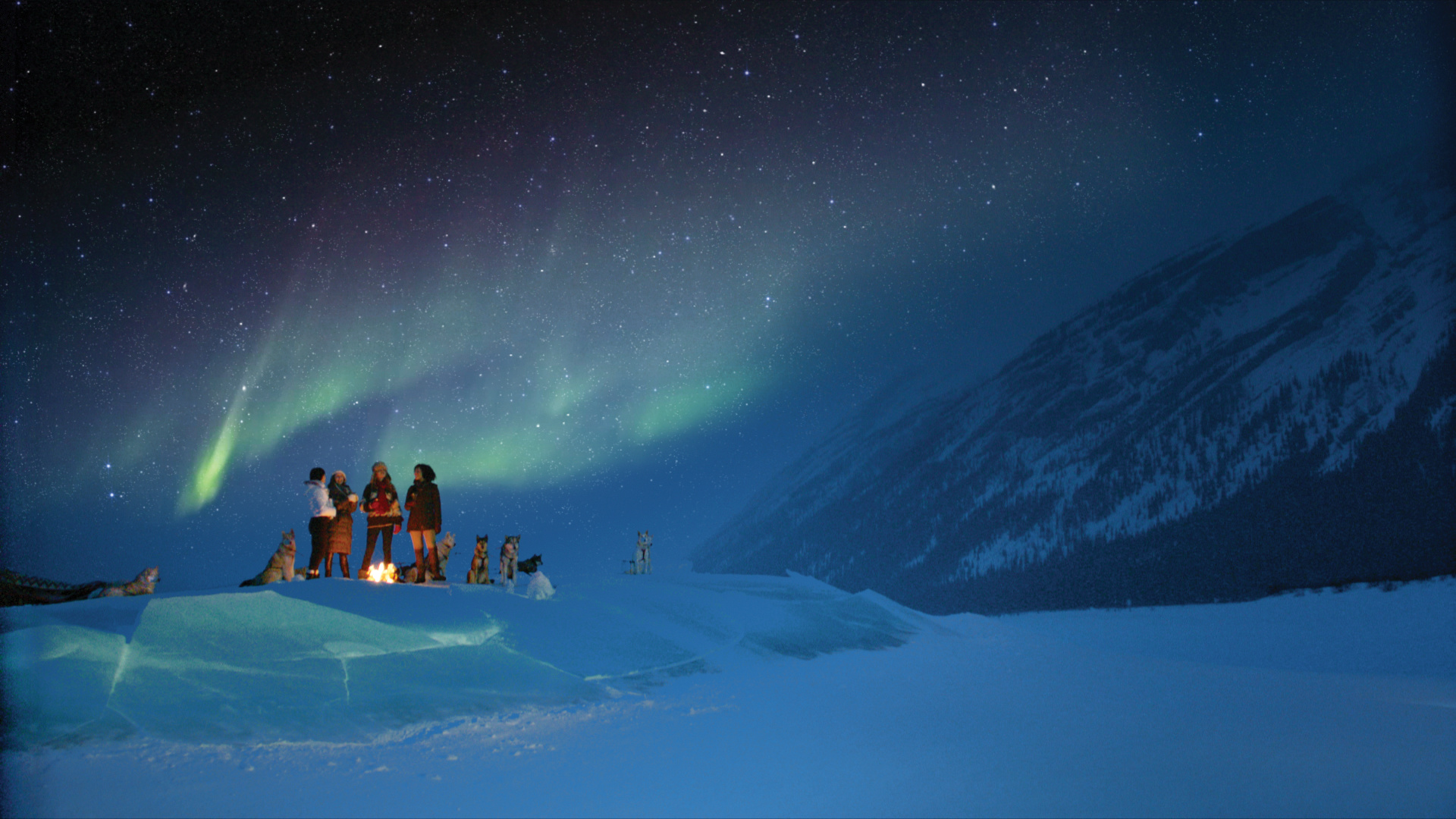
What to Bring to a Northern Lights Chasing
Rocky Mountain nights can get cold quickly, especially when you’re standing still waiting for the sky to change.
Bring warm layers, gloves, a toque and insulated winter boots when conditions call for them. A thermos with a hot drink isn’t a bad idea either.
A headlamp can help you safely get around, but use a red-light setting if you have one and keep bright lights to a minimum around other stargazers and photographers. Our winter guide to Banff and Canmore has more ideas for planning your time in the mountains.
If you’re driving to a more remote viewing location, make sure you have enough fuel and check road conditions before leaving. Don’t count on having cell service everywhere in Kananaskis.
How to Photograph the Northern Lights on an iPhone
Modern phones can capture a surprising amount of detail in low light, and sometimes your phone’s camera will pick up aurora colours before they’re obvious to your eyes.
For an iPhone:
- Use Night mode on a supported model.
- Keep your phone completely still. A small tripod works best, but a stable surface can work too.
- Increase the Night mode exposure time when your phone allows it.
- Turn off the flash.
- Use the main camera rather than zooming digitally for better image quality.
- Try several exposures. Aurora brightness can change from one minute to the next.
Once you’ve taken the shot, check that the stars are sharp. If they’re blurry, stabilize the phone and try again.
How to Photograph the Northern Lights With a DSLR or Mirrorless Camera
If you’re using a DSLR or mirrorless camera, switch to manual mode so you can adjust your settings as the aurora changes.
A useful starting point is:
- Aperture: f/2.8 or wider
- ISO: 800–3200
- Shutter speed: roughly 2–15 seconds
- Focus: manual focus near infinity
- File format: RAW
Always use a tripod.
If the aurora is moving quickly, try a shorter shutter speed to preserve detail in the curtains and bands. If it’s faint and relatively still, a longer exposure may capture more colour.
Review your images as you go. There isn’t one perfect setting for every aurora display.
Northern Lights Viewing Tips for Banff, Canmore, and Kananaskis
A few local details can make your night easier.
Check road conditions before leaving, especially after snowfall. Wildlife is active at night throughout the Rockies, so slow down and stay alert while driving. Use established parking areas rather than pulling onto an unsafe shoulder.
If you’re heading into Kananaskis, check whether you need a Kananaskis Conservation Pass. If you’re visiting Banff National Park, make sure you have a valid Parks Canada pass.
And remember that you don’t need to drive deep into the mountains every time an aurora alert appears. During a strong geomagnetic storm, you may be able to see the northern lights close to Canmore or Banff once you find a darker patch of sky.
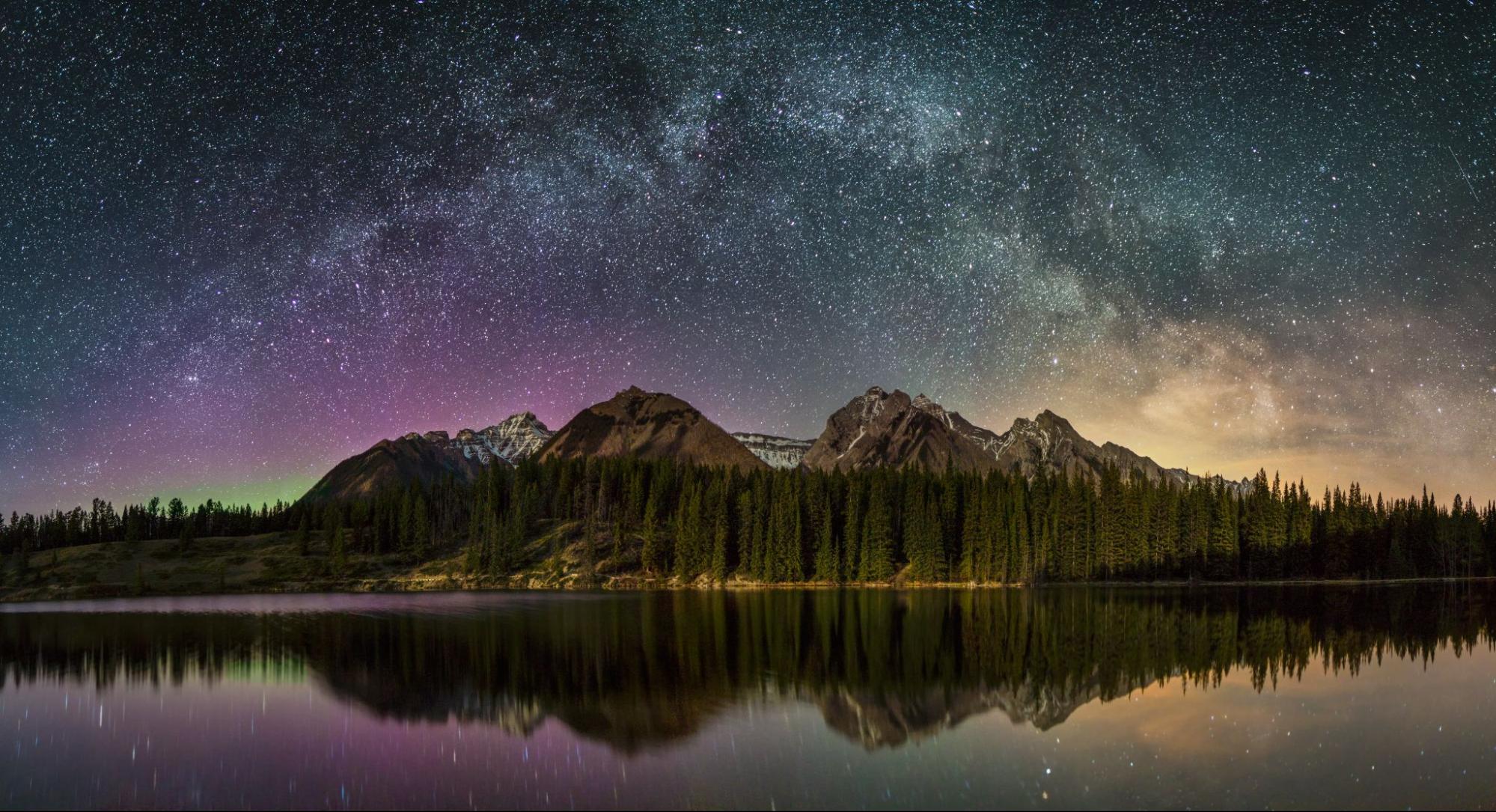
Make Canmore Your Base for Northern Lights Chasing
The best northern lights nights rarely follow an itinerary. Sometimes the forecast changes at 10 PM and suddenly it’s time to grab your coat, camera and keys.
Staying in Canmore puts you within easy reach of viewing locations around the Bow Valley, Kananaskis Country and Banff National Park. Basecamp’s Canmore properties give you a comfortable home base for exploring the Rockies by day and watching the skies after dark.
Still deciding where to base yourself? Our Banff vs. Canmore winter guide breaks down the differences between two mountain towns.
