


For hikers, the wildflower season is a chance to see familiar landscapes transformed. Trails that are already known for turquoise lakes, waterfalls and mountain views gain another layer of colour, often for only a few short weeks.
From accessible lakeside walks to full-day alpine adventures, these are some of the best wildflower hikes in Alberta and BC. Each trail is within reach of a Basecamp destination, making it easy to build a summer mountain getaway around peak hiking season.
When Is Wildflower Season in Alberta and BC?
Wildflower timing changes with elevation, snowmelt and weather conditions. Lower-elevation flowers can begin appearing in late spring, while alpine meadows generally reach their most colourful point later in summer.
In Banff and Lake Louise, wildflower season typically runs from early July into mid-August, although the timing varies each year. Mount Revelstoke’s highest meadows often bloom later, with Parks Canada identifying the second week of August as the average peak period.
Rather than planning around one exact date, choose a flexible window from mid-July through mid-August. Check current trail reports before leaving, especially when heading into higher elevations where snow can remain well into summer.
1. Sunshine Meadows Near Banff
Difficulty: Easy to Moderate | Distance: ~10 km loop (or ~8 km round trip to Rock Isle Lake only) | Type: Loop | Time: 3–4 hours
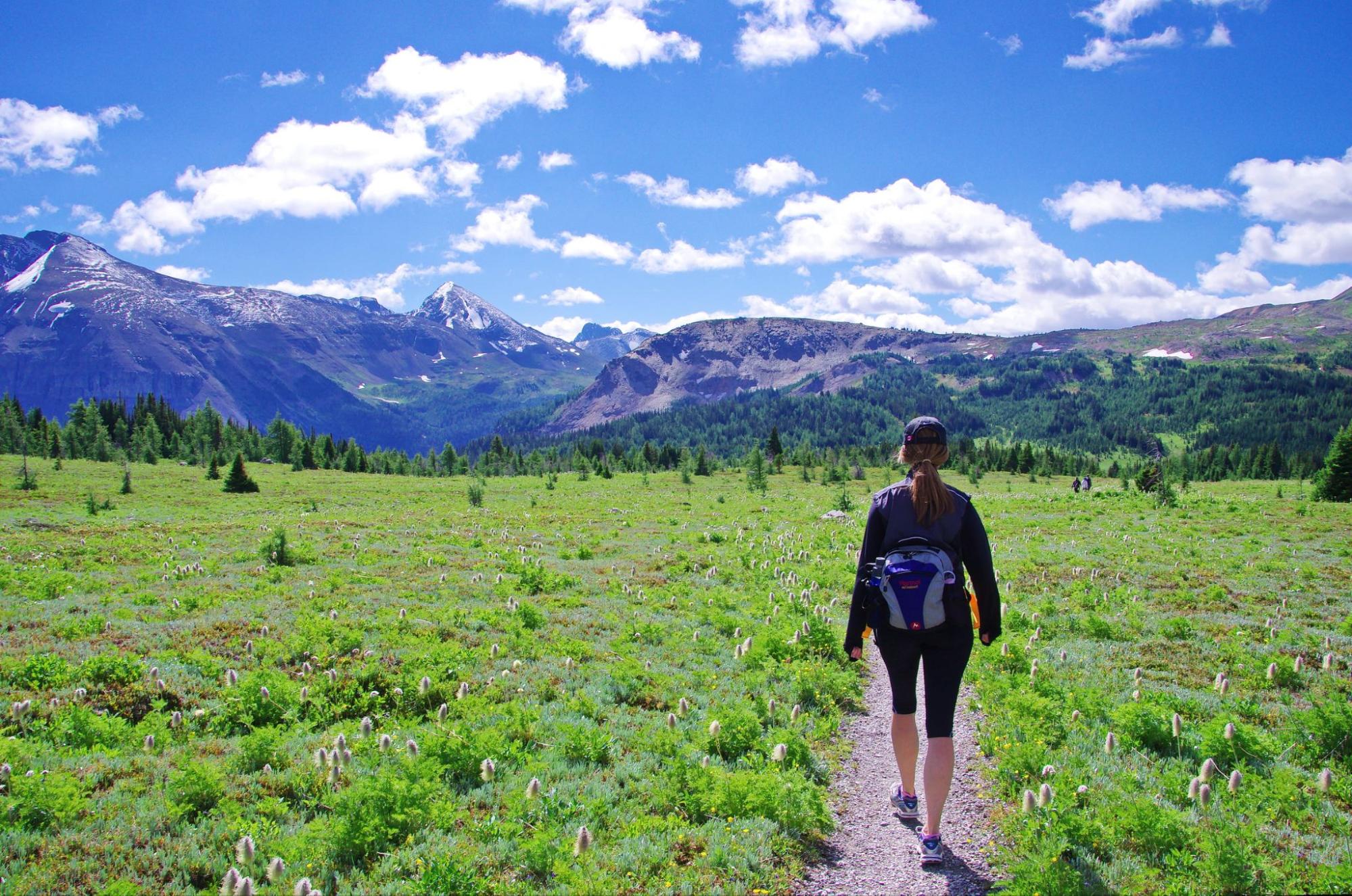
With broad alpine views and an extensive network of trails, Sunshine Meadows is one of the most recognizable wildflower hiking areas near Banff.
The high-elevation landscape supports colourful summer meadows surrounded by peaks and small alpine lakes. Visitors can choose from several routes, making the area suitable for anything from a relaxed walk to a longer hiking day.
Rock Isle Lake is a popular destination, while extensions toward Grizzly Lake and Larix Lake offer more time among the meadows. Access arrangements and operating dates can change, so confirm current transportation details before your visit.
Best Basecamp destination: Banff or Canmore
Best for: Alpine scenery, flexible distances and first-time visitors
2. Bow Summit and Peyto Lake
Difficulty: Moderate | Distance: ~6.8 km round trip | Type: Out-and-back | Time: 2–3 hours
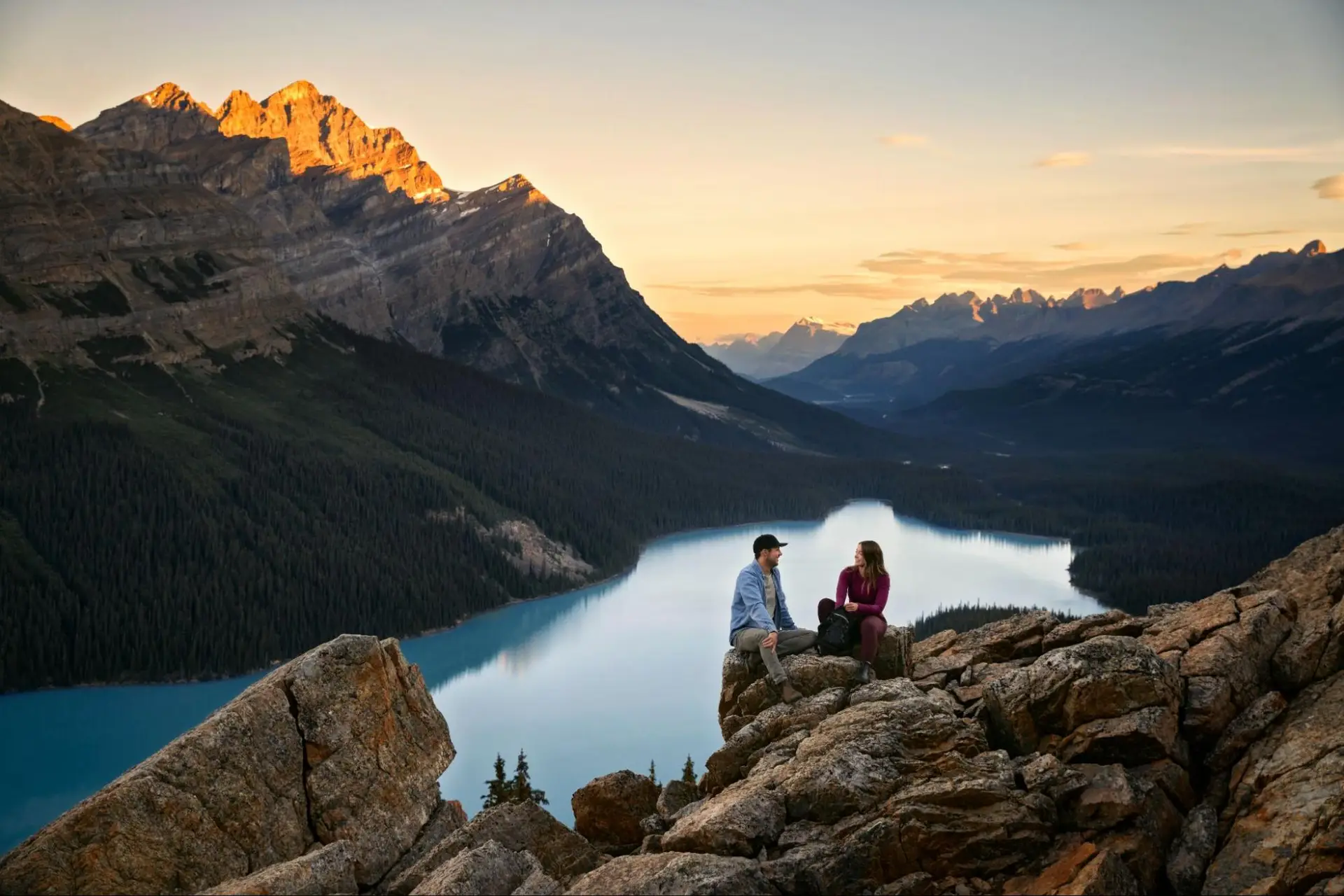
The Bow Summit area along the Icefields Parkway combines an iconic viewpoint with a chance to explore the surrounding subalpine landscape.
Many visitors stop after seeing Peyto Lake, but hikers can continue beyond the main viewpoint toward quieter terrain. During the wildflower season, open areas along the route may feature alpine blooms framed by the Waputik Range.
Stay on established trails and durable surfaces. High-elevation vegetation grows slowly, and even a few footsteps through a meadow can cause lasting damage.
Best Basecamp destination: Baker Creek or Lake Louise
Best for: Lake views, photography and a shorter scenic outing
3. Lake Agnes and the Big Beehive
Difficulty: Moderate (Lake Agnes) to Difficult (Big Beehive) | Distance: ~7.5 km round trip; ~10.8 km with the Big Beehive | Type: Out-and-back | Time: 3–3.5 hrs; 4–5 hrs with the Big Beehive
Beginning beside Lake Louise, the Lake Agnes Trail climbs through forest to a mountain lake, historic teahouse and surrounding viewpoints.
Wildflowers appear in sunny clearings and along sections of the lakeshore as summer progresses. Hikers looking for a bigger day can continue to the Big Beehive for elevated views over Lake Louise or connect with additional trails in the area.
This is one of Banff National Park’s busiest hiking corridors. Begin early, bring water and prepare for changing mountain weather even when the morning forecast looks clear.
Best Basecamp destination: Lake Louise or Baker Creek
Best for: A classic Lake Louise hike with several route options
4. Chester Lake in Kananaskis
Difficulty: Easy to Moderate | Distance: ~9 km round trip | Type: Out-and-back (loop variation available) | Time: 3–4 hours
Chester Lake is a favourite Kananaskis hike for good reason. The trail climbs steadily through forest before reaching an open valley, where mountain views, rocky slopes and seasonal wildflowers surround the lake.
The route offers a rewarding alpine-style setting without requiring a highly technical ascent. Strong hikers can explore farther toward the Elephant Rocks while remaining mindful of trail conditions and sensitive vegetation.
A Kananaskis Conservation Pass is required for vehicles parked in Kananaskis Country and the Bow Valley corridor. Check Alberta Parks advisories before travelling, as wildlife activity and seasonal conditions may affect access.
Best Basecamp destination: Sundance Kananaskis or Canmore
Best for: Families with hiking experience and relaxed mountain picnics
5. Burstall Pass in Kananaskis
Difficulty: Moderate to Difficult | Distance: ~14.8 km round trip (7.4 km one way) | Type: Out-and-back | Time: 5–6 hours
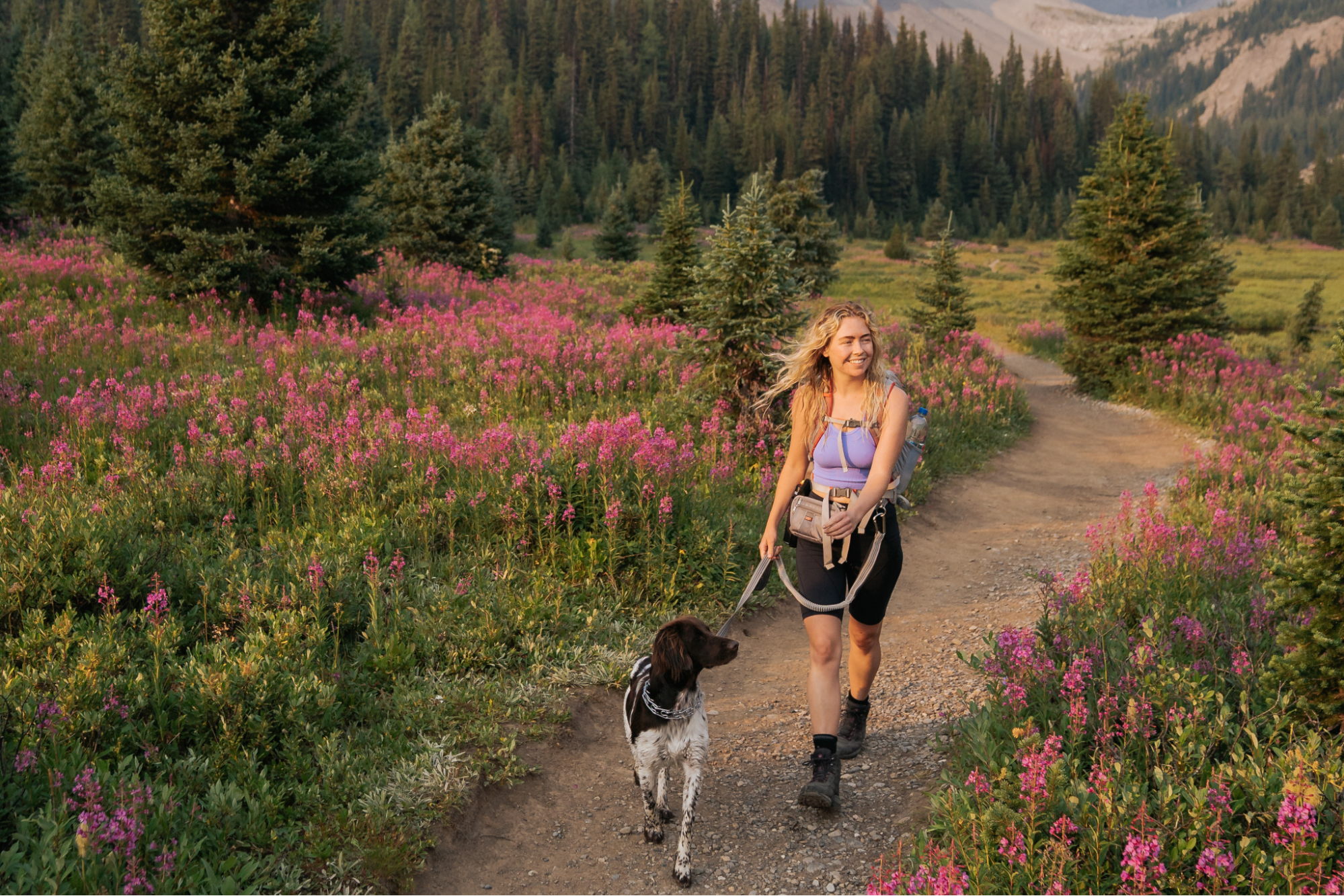
Burstall Pass is a rewarding choice for hikers looking for a longer day among forests, open wetlands and high alpine scenery.
The trail begins with a relatively gentle approach before crossing the Burstall Lakes area and climbing more steadily toward the pass. As the route gains elevation, the landscape opens into broad meadows where seasonal wildflowers add colour beneath the surrounding peaks.
At approximately 7.4 kilometres one way, this is a more demanding outing than many of the hikes on this list. Prepare for wet or muddy sections near the lakes, bring layers for changing weather and leave enough time for the return trip. Alberta Parks permits bikes on the first 3.5 kilometres of the trail, which some visitors use to shorten the approach.
Best Basecamp destination: Sundance Kananaskis or Canmore
Best for: Experienced hikers, longer summer days and expansive alpine scenery
6. Eva Lake and Miller Lake in Revelstoke
Difficulty: Moderate to Difficult (long distance, gentle grade) | Distance: ~16 km round trip to both lakes | Type: Out-and-back | Time: 5–7 hours
Mount Revelstoke National Park is one of the best wildflower destinations in British Columbia. The Meadows in the Sky Parkway climbs from the valley to renowned subalpine meadows near the summit.
From there, the Eva Lake and Miller Lake routes cross rolling terrain dotted with seasonal blooms. Parks Canada describes Eva Lake as a classic subalpine hike, while Miller Lake can be visited as a scenic side trip.
Access depends on snowmelt and the seasonal opening of the parkway. As of July 6, 2026, Parks Canada reported snow, mud and slippery sections on these trails and did not recommend hiking them at that time. Conditions can change quickly, so always consult the latest report.
Best Basecamp destination: Revelstoke
Best for: Peak-season wildflowers and a full mountain day
7. Balu Pass in Glacier National Park
Difficulty: Moderate to Difficult | Distance: ~12.8 km round trip | Type: Out-and-back | Time: 4–5 hours
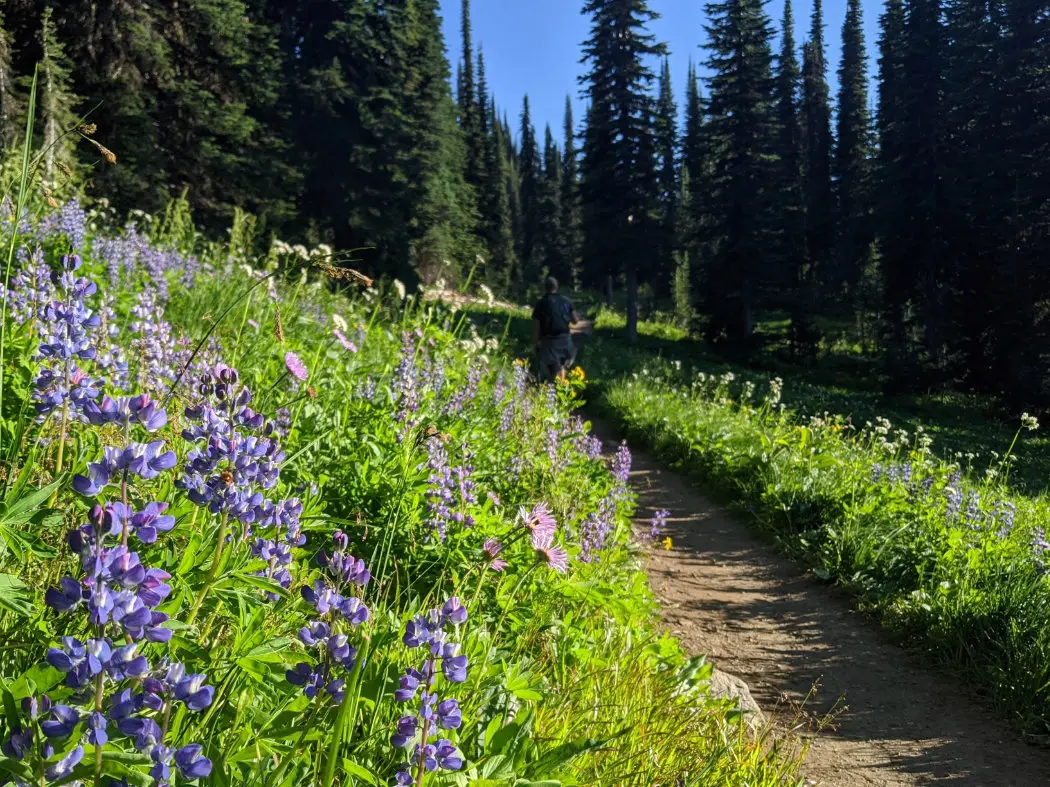
East of Revelstoke, Balu Pass climbs from Rogers Pass through forest and into expansive alpine terrain.
This is a more challenging outing, with significant elevation gain and a relatively short high-elevation hiking season. Those who arrive when the route is snow-free may find open slopes filled with flowers beneath the Selkirk Mountains.
Glacier National Park is active bear country, and Parks Canada may introduce group-size restrictions or closures. Review the current trail report, carry bear spray and know how to use it.
Best Basecamp destination: Revelstoke
Best for: Experienced hikers seeking a demanding alpine route
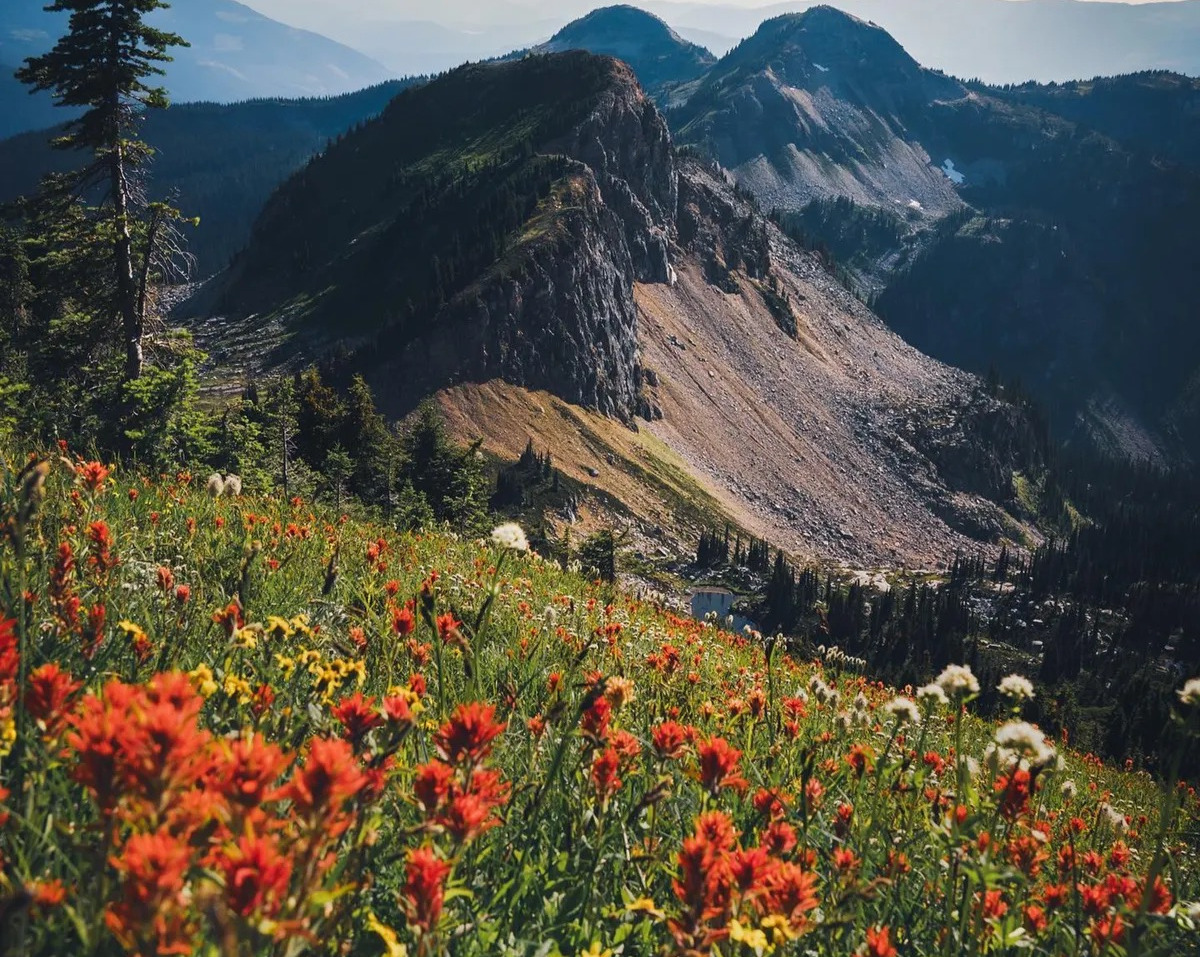
8. The Iceline Trail in Yoho National Park
Difficulty: Difficult | Distance: ~20 km loop (or ~14 km round trip out-and-back) | Type: Loop or out-and-back | Time: 7–8 hours for the full loop
For hikers planning a longer adventure from Lake Louise or Baker Creek, the Iceline Trail delivers glaciers, waterfalls, broad viewpoints and sections of alpine meadow.
Multiple route variations are possible, including demanding full-day loops and overnight itineraries. Its length, elevation and exposed terrain make it best suited to prepared hikers who are comfortable with a bigger mountain day.
Cell service is limited in Yoho National Park. Carry navigation tools, extra food, warm layers and a clear turnaround plan. Always be sure to check the latest trail conditions before heading out.
Best Basecamp destination: Lake Louise or Baker Creek
Best for: Experienced hikers and full-day adventures
Tips for Responsible Wildflower Hiking
Wildflowers are part of a fragile mountain ecosystem. Leave them where they grow, remain on established trails and avoid stepping into meadows for photographs. Pack out everything you bring and give wildlife plenty of space.
Carry bear spray, check weather and trail reports, and choose a route that matches the ability of everyone in your group. Parking rules, shuttle systems, park access and trail restrictions can change throughout the summer.
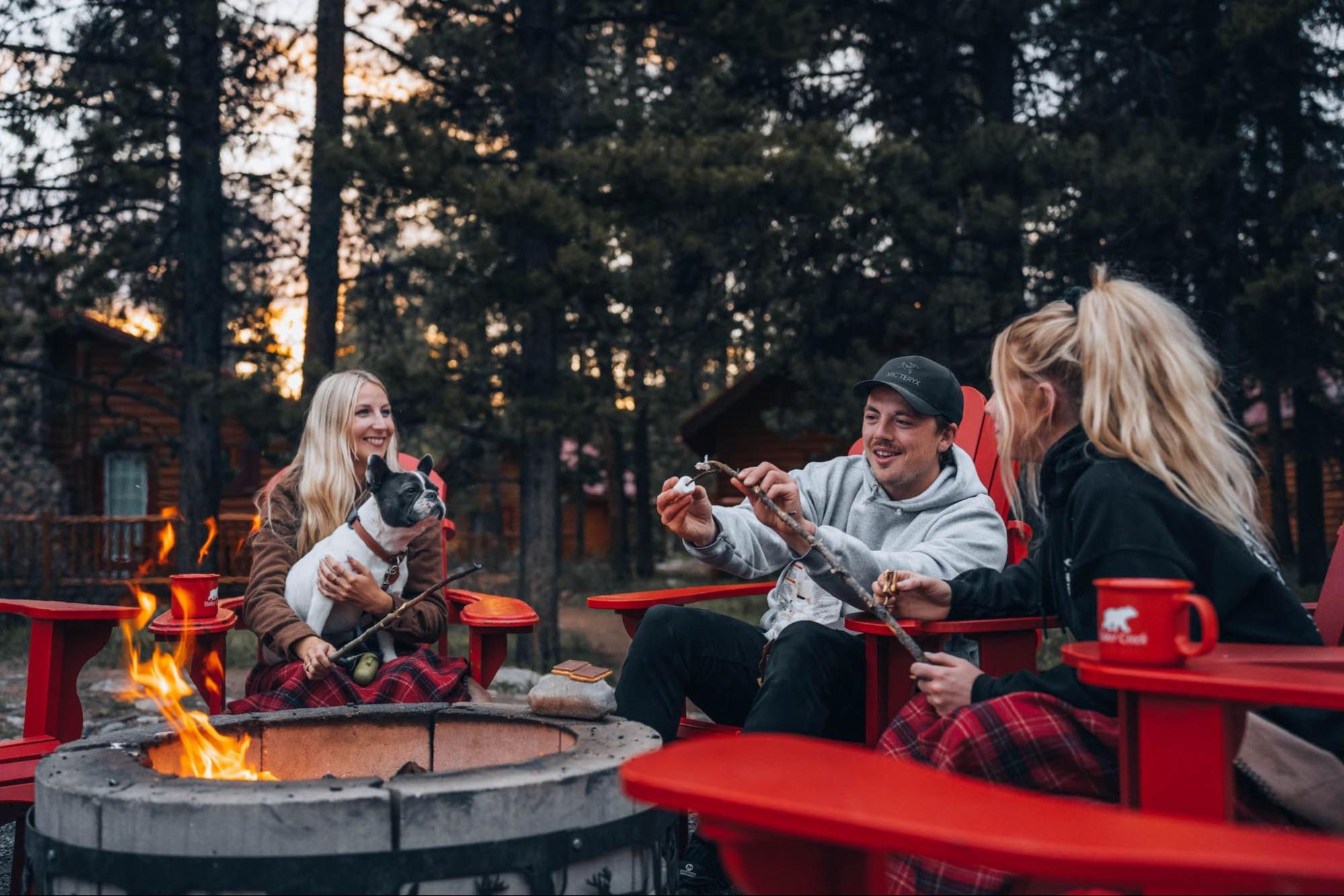
After a day among the meadows, return to a comfortable home base with room to clean up, prepare dinner and plan tomorrow’s trail. With properties near Banff, Canmore, Kananaskis, Lake Louise and Revelstoke, Basecamp Resorts keeps you close to some of the best wildflower hikes in Alberta and BC.
Book your summer stay directly with Basecamp Resorts and make the mountain wildflower season part of your next adventure.